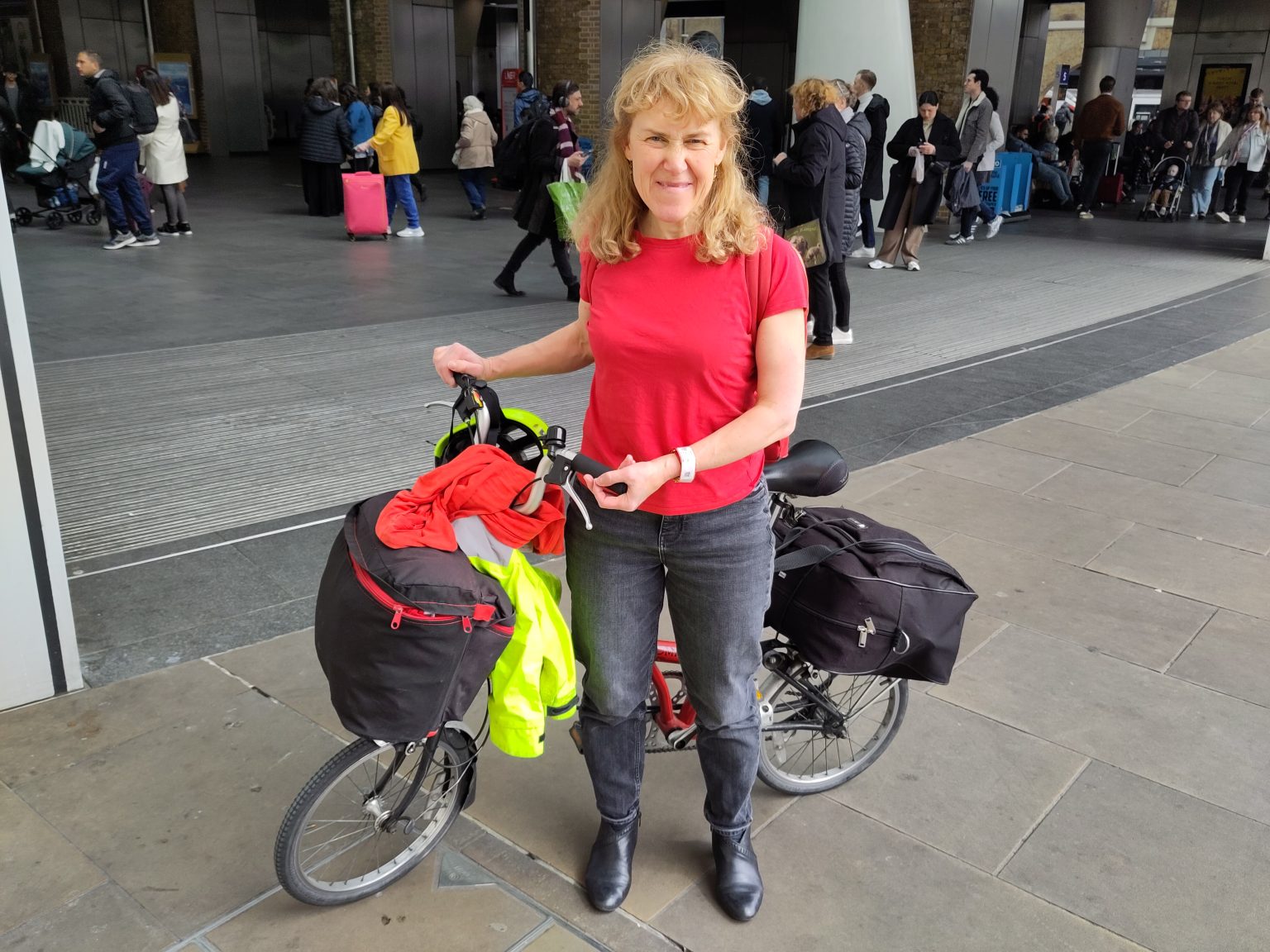
by Professor Scarlett McNally OBE
ESCC meeting
This is supposed to be a good news story, but it’s only about clawing a small win from a lengthy, painful, bureaucratic defeat. I recently attended a meeting at East Sussex County Council (ESCC). Over several years, I and others from Bespoke have argued that the pedestrianisation of Eastbourne’s town centre will create severance issues for cyclists and potential cyclists trying to go to or through town. It will push cyclists onto the more dangerous ring roads. Fewer people will make the modal shift from a car. Eastbourne is only 4 miles across, yet most people drive into town, increasing congestion, pollution, and road traffic collisions.
I particularly campaigned for the part outside Marks and Spencers, where you can currently drive, to have a two-way cycle lane. Sadly, the whole area from the station to the seafront will be pedestrianised, without any provision for cycling (apart from some cycle parking that has broken). Our new small “win” is that a trial Traffic Regulation Order will begin, which will permit cycling at certain times.
I am weary of this. Other places do this better. ESCC is going backwards compared to most of the UK and Europe.
ESCC promises that new cycle routes are being installed in the next couple of years – unfortunately, these mostly involve paint on the road (e.g. Grange Road). What is really needed is a change of driver mindset and of local government “motonormativity”. We also need 20mph where people are – I’ve cycled a lot in London, Leicester, Manchester, and Bristol. 20mph reduces road collisions, casualties, and the severity of injuries and means people are less likely to be scared of cycling or walking. 22% of households have no access to a car, and 8% are in transport poverty (having to run a car they can’t really afford). Safer streets would reduce congestion, pollution, and traffic collisions for everyone.
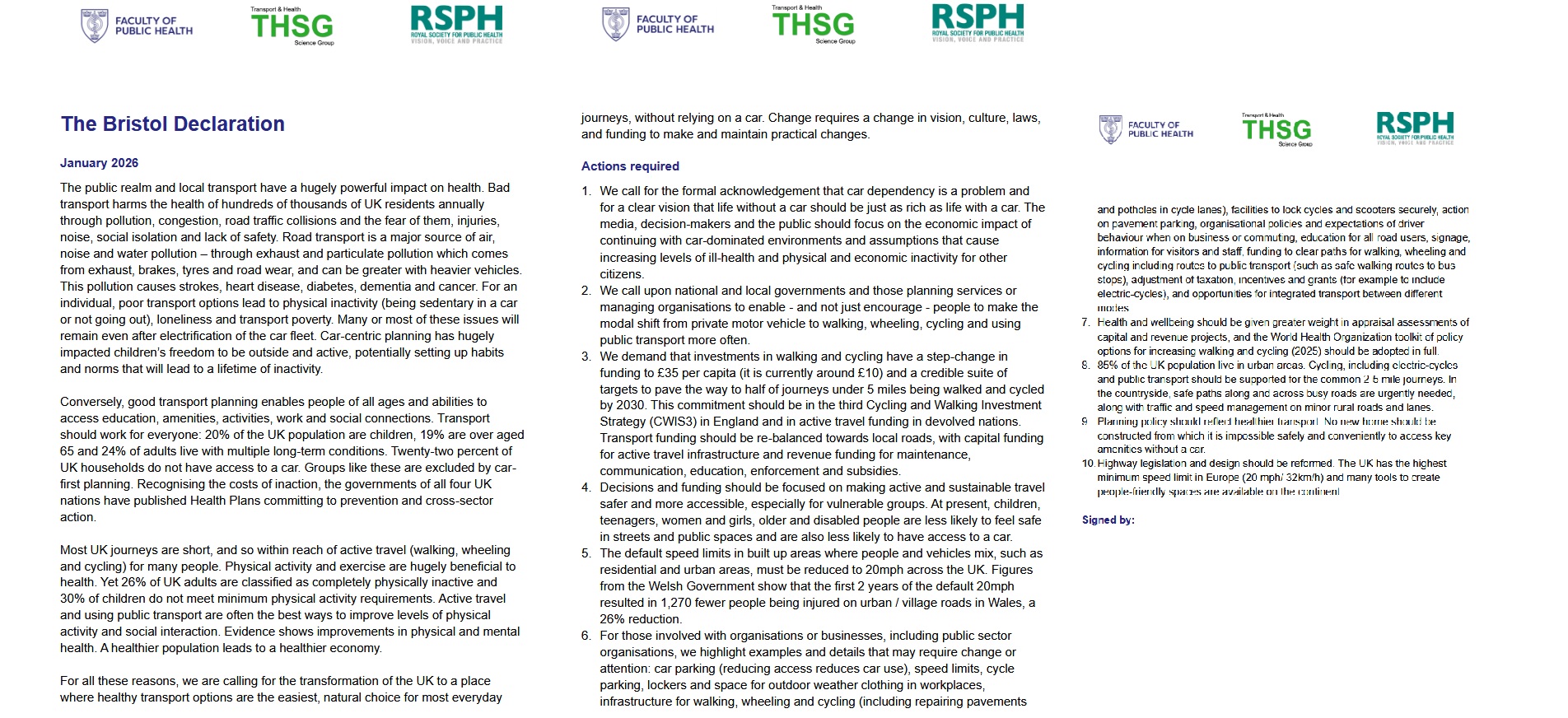
I led “The Bristol Declaration”
I have written national articles about the impact of transport on health. The negatives of car-centred transport: pollution, physical inactivity, injuries from traffic collisions, stress, and transport poverty. The positives of active travel (walking, wheeling and cycling) and public transport: safety, physical activity, social connection. I was lead author for a report called “Exercise: the miracle cure” in 2015. People who achieve 150 minutes per week reduce their risk of dementia, depression, diabetes, and many cancers by 30%. That’s 21 minutes per day. It’s better if it is fitted into a schedule, so travel is the best way.
We have now launched a document for everyone: “The Bristol Declaration” is new and summarises the impact of transport on health. This is endorsed by the Faculty of Public Health and the Royal Society of Public Health. I coordinated this. Please find the press release at: https://www.fph.org.uk/news/bristol-declaration-on-healthy-transport/ and the Declaration on https://www.fph.org.uk/media/24zg1t1q/the-bristol-declaration-110326.pdf. It explains the positives and negatives, with references, and has 10 recommendations.